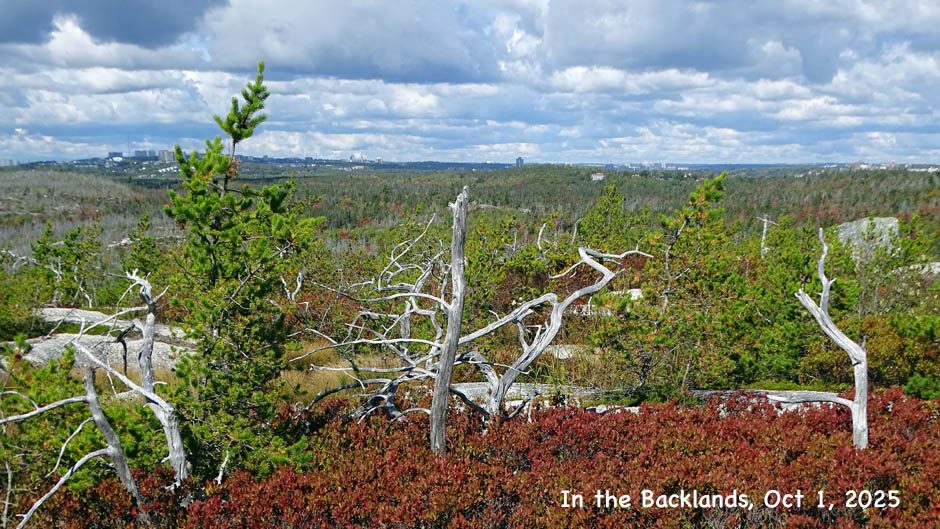
Drafting. Oct 6, 2026…
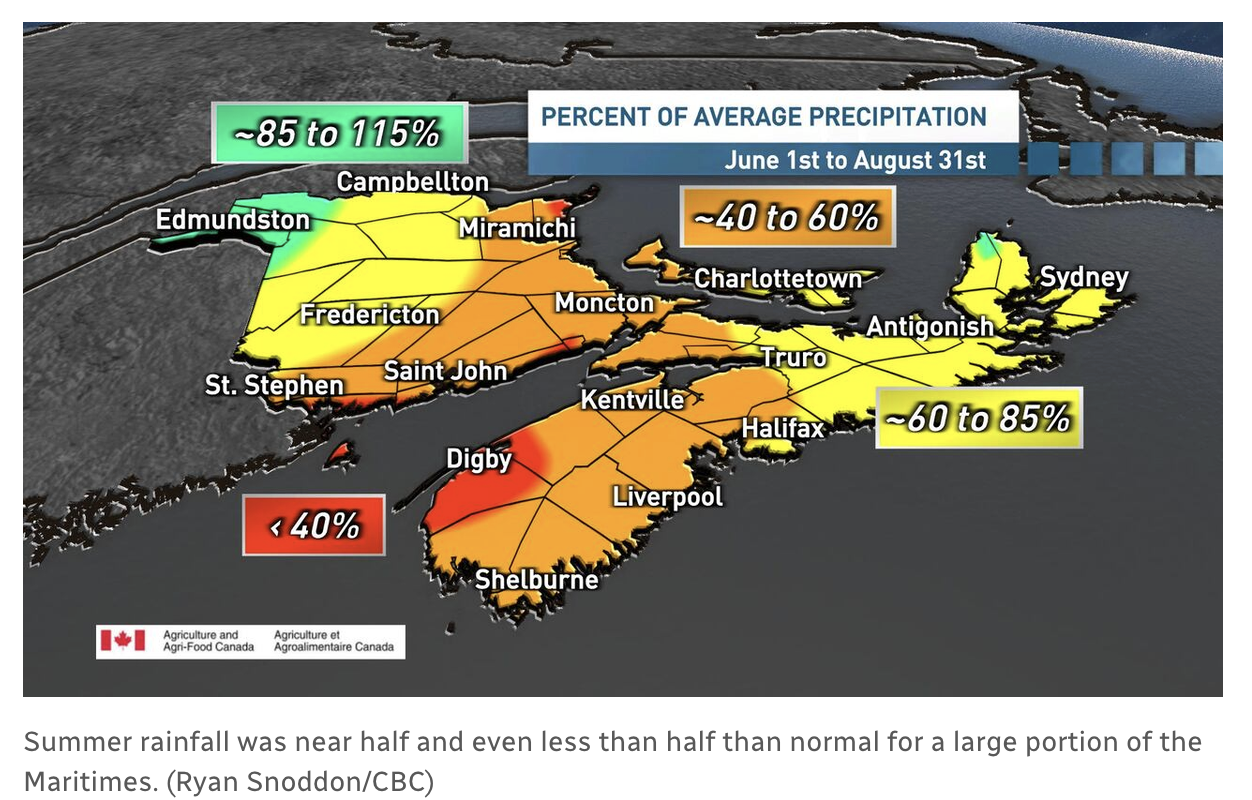
Fig. 1. Map showing water deficits. in NS in 2025. Screencapture from a photo in CBC posting– Was it the driest summer on record in the Maritimes? Ryan Snoddon · CBC News, Sep 23, 2025
2025 was the driest summer on record over much of Nova Scotia, reflected in many wells going dry, crop failures and in devastating forest fires.
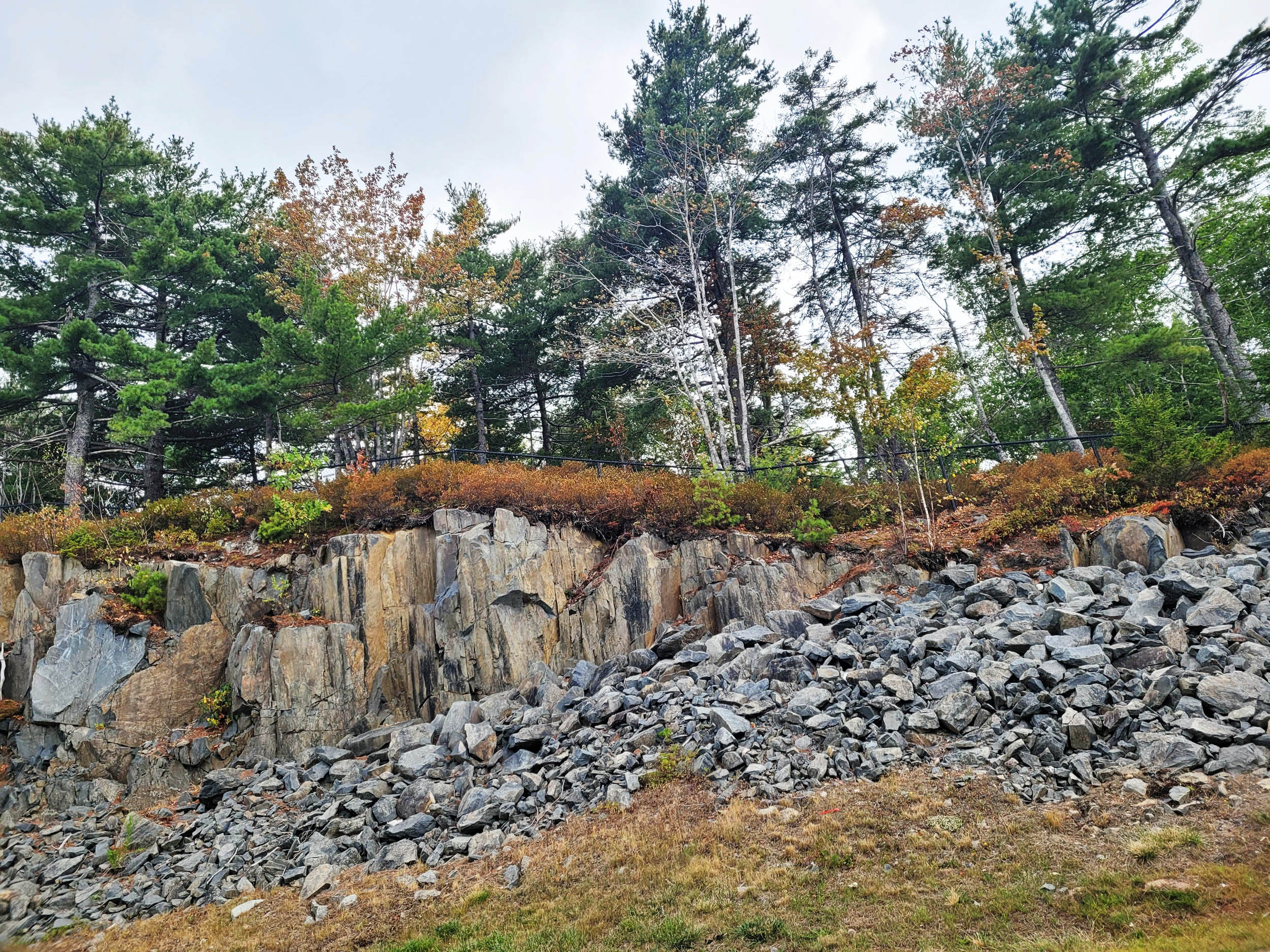
Fig. 2. Site on Halifax Mainland Aug 13, 2025 illustrating early senescence of Huckleberry (bushes) and deciduous trees in an area of shallow soils over bedrock
There was notable severe vegetation stress – early senescence, leaf browning, leaf drop – on sun exposed sites on shallower soils in the urban landscape.
Because of the extreme fire hazard, a woods travel ban was issued by the province on Aug 5, 2025. It was lifted in some parts of NS, including Halifax on Aug 29th.
On Sep 6, I walked the Etu’qamikejk Trail though mixed forest by Williams Lake. Low water flow in the streams and dry fens were obvious signs of the drought, but I was struck by the absence of any signs that the severe drought had significantly stressed the vegetation – except at outcrops at the margins of the forest and in the most sun-exposed areas within fens (see Figs. 3-10 below)
Figs. 3 – 10: Photos on the Etu Trail (Shaw Wilderness Park) on Sep 6, 2025. See Fig. 5 for locations on Google Earth Map. Click on images for larger versions.
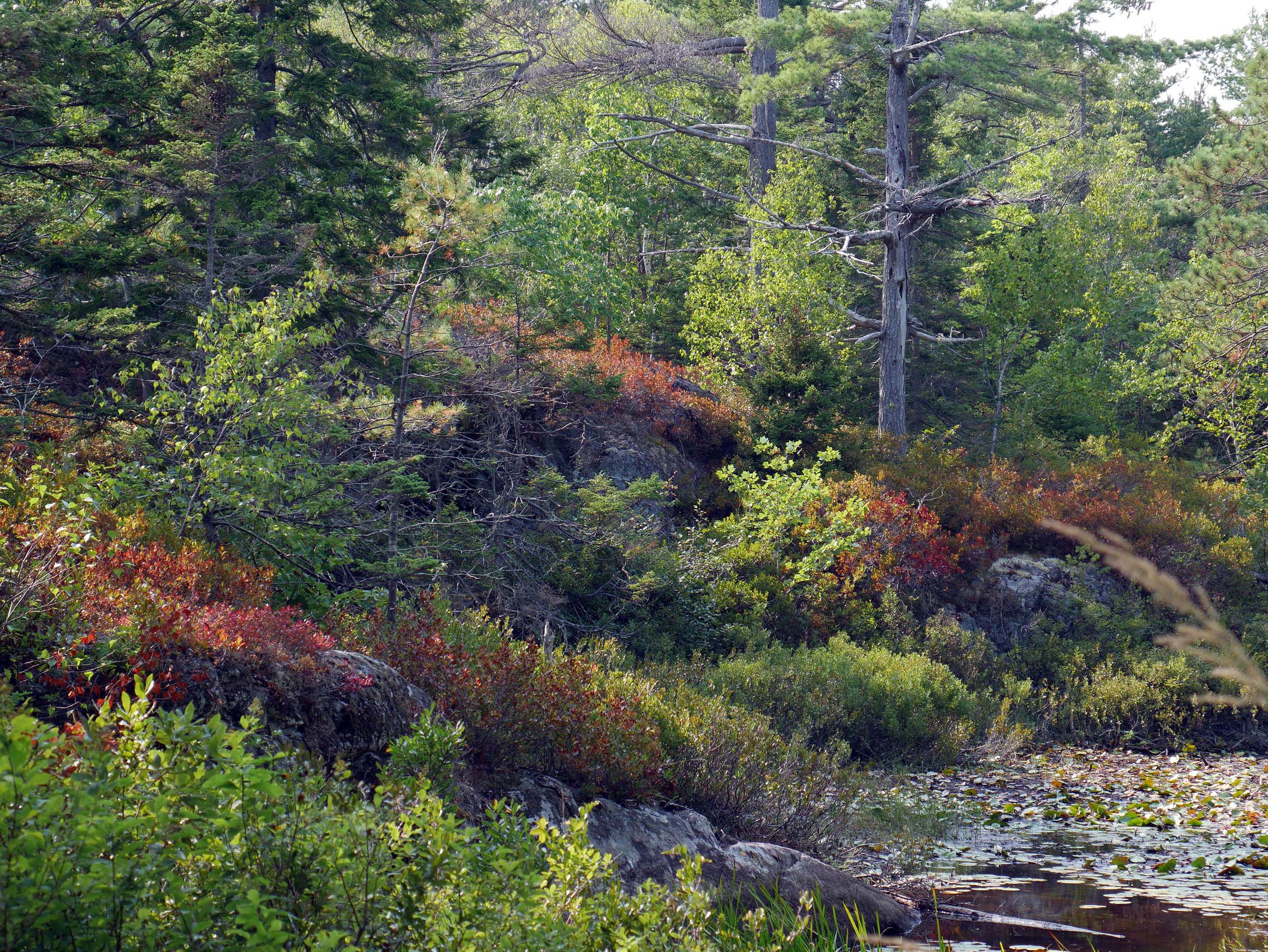 Fig. 3. Early fall senescence of Black Huckleberry on exposed outcrops (Loc. A) |
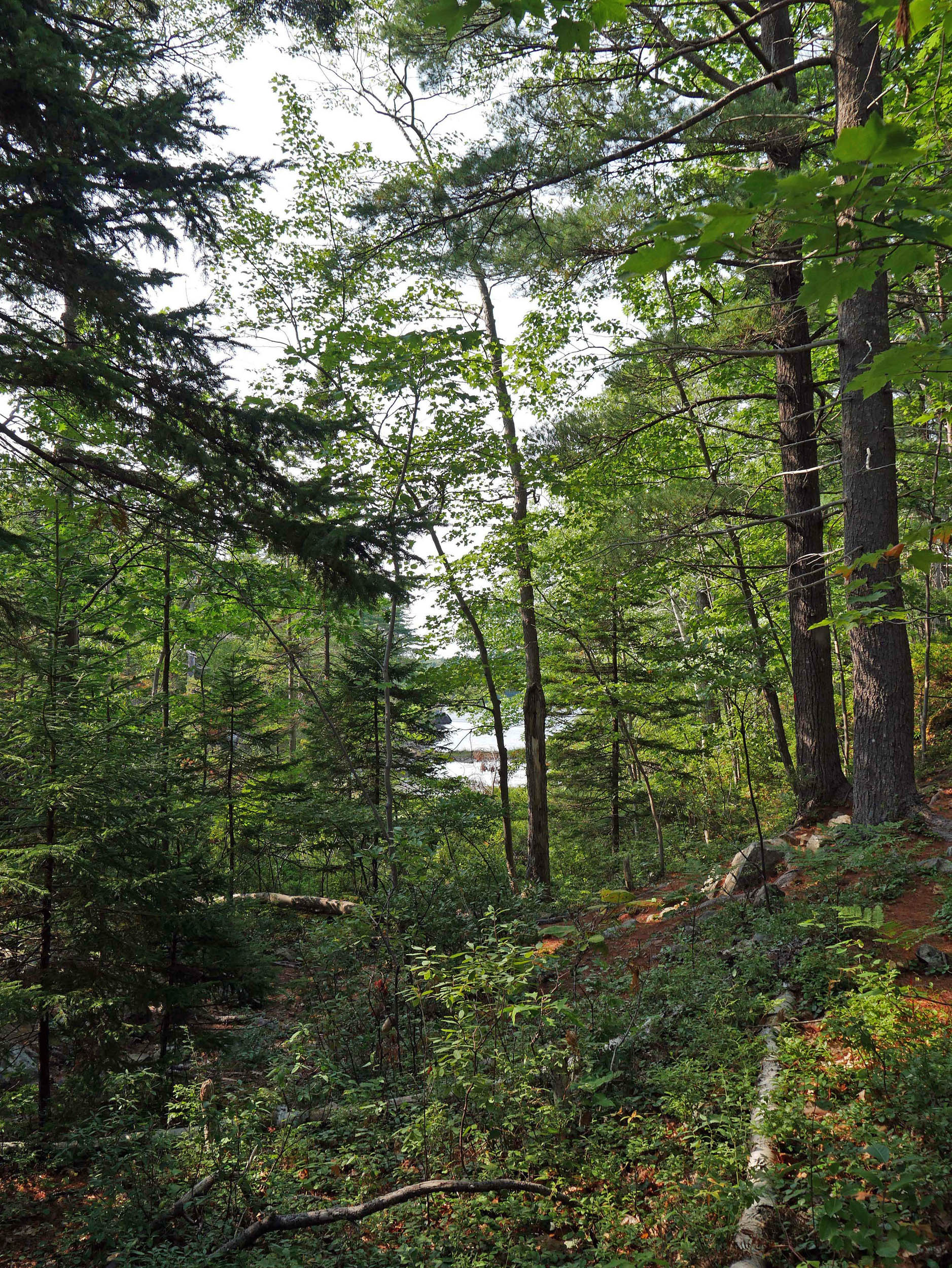 Fig. 4. Inside the forest canopy (Loc. B) |
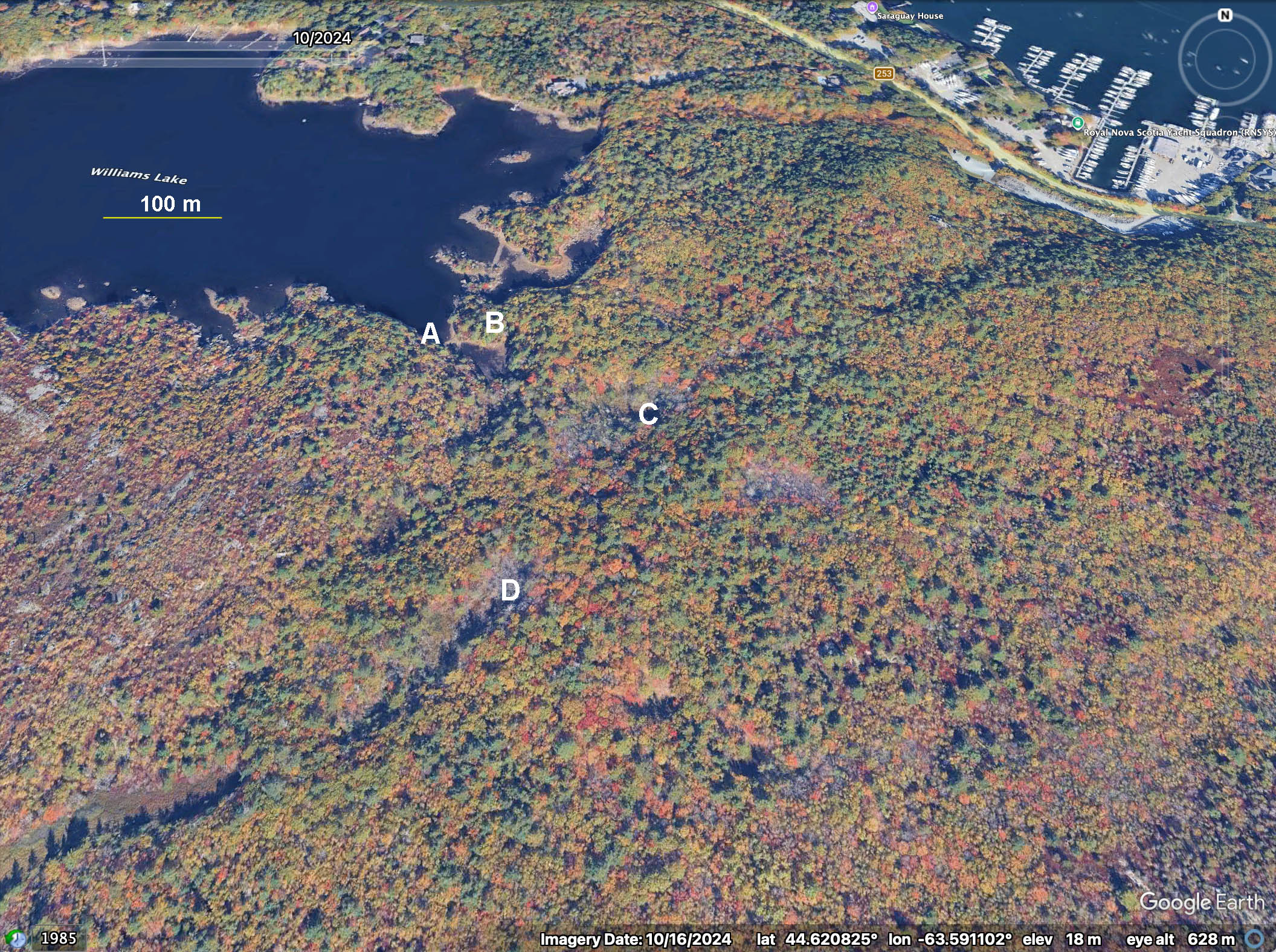 Fig. 5. Google Earth Map showing locations of photos |
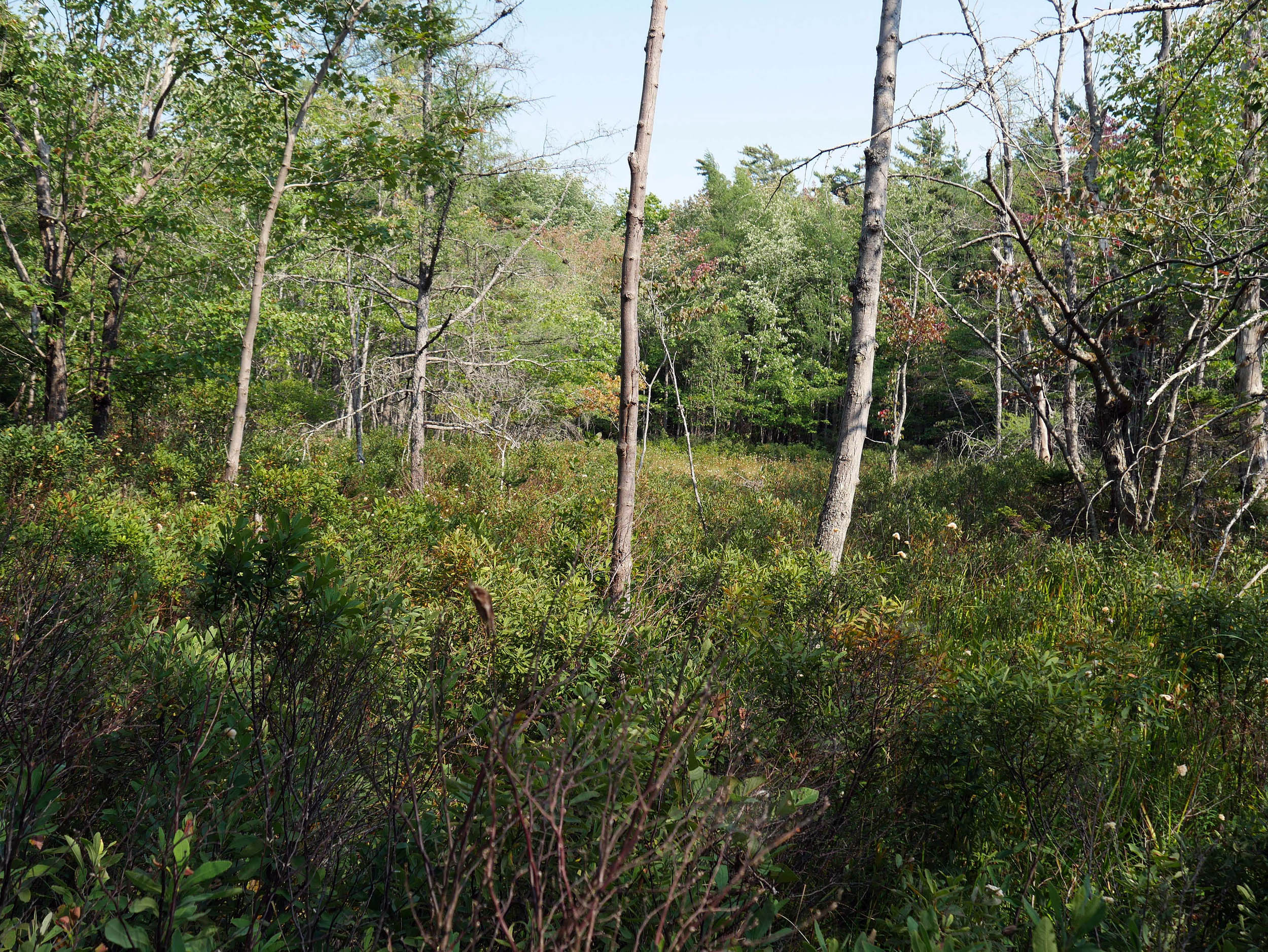 Fig. 6. Fen at Loc C. |
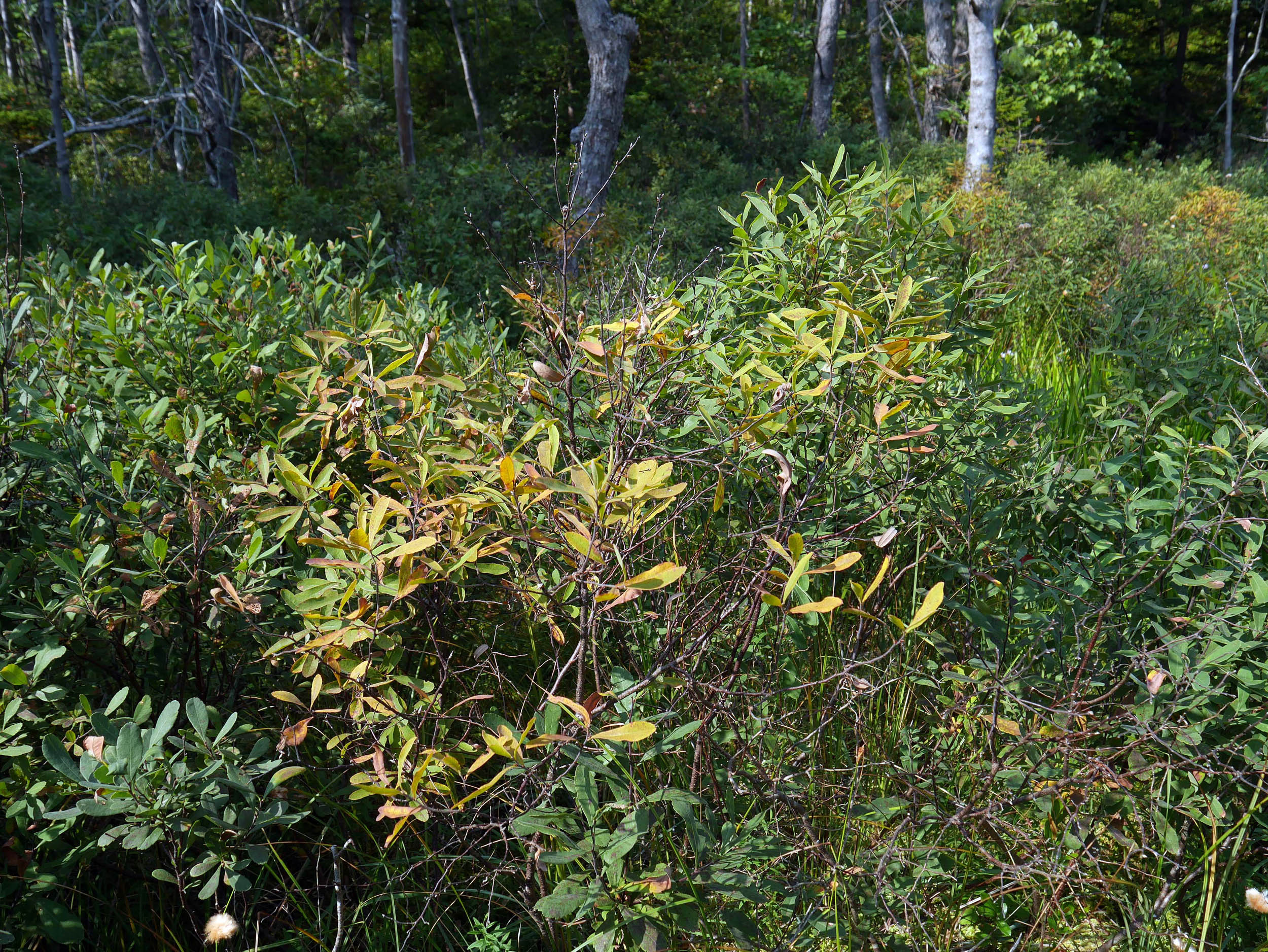 Fig. 7. Early fall senescence of Sweet Gale where it was most exposed to the sun in fen at Loc. C |
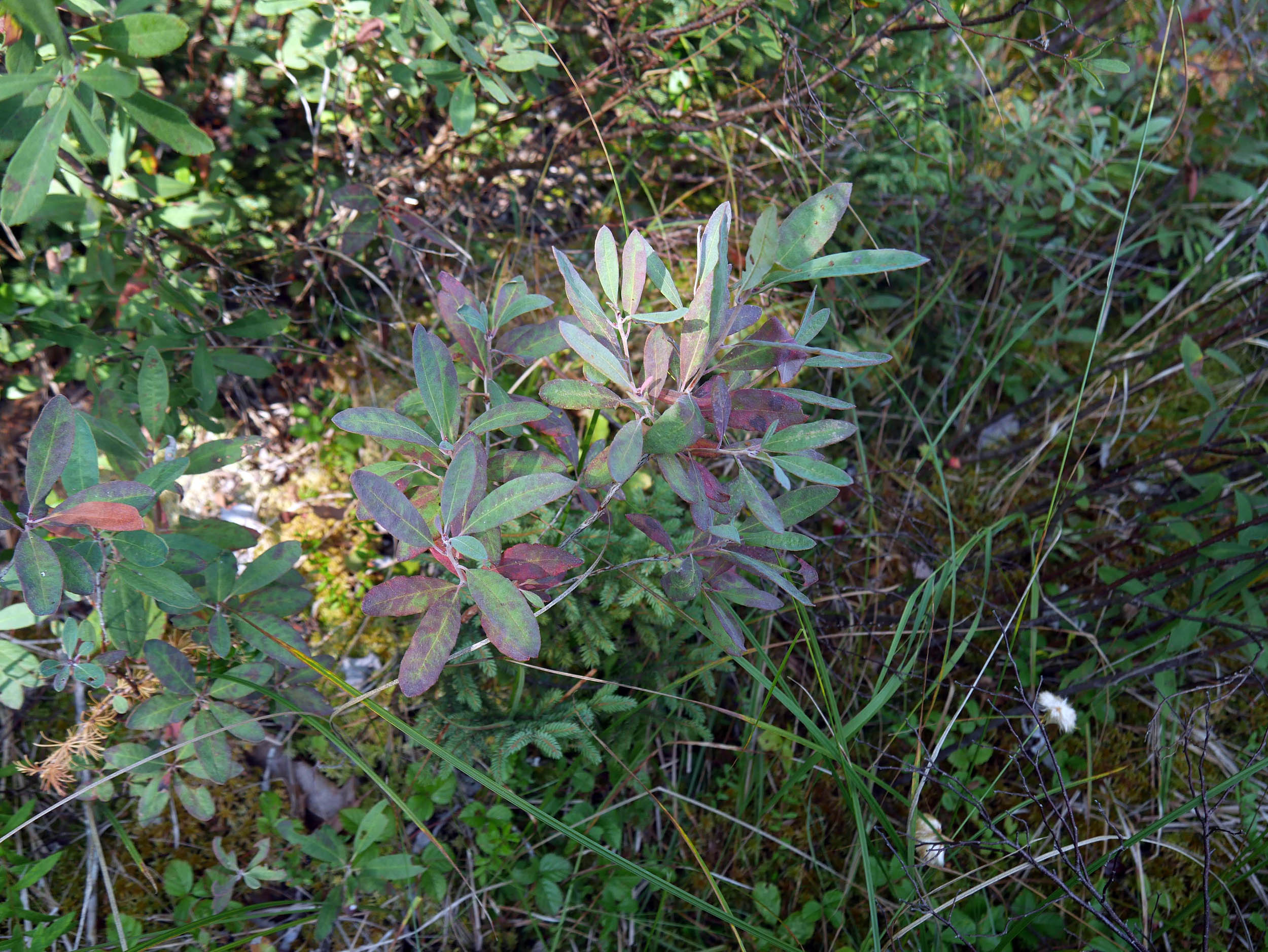 Fig. 8. Early fall senescence of Rhodora where it was most exposed to the sun in fen at Loc. C |
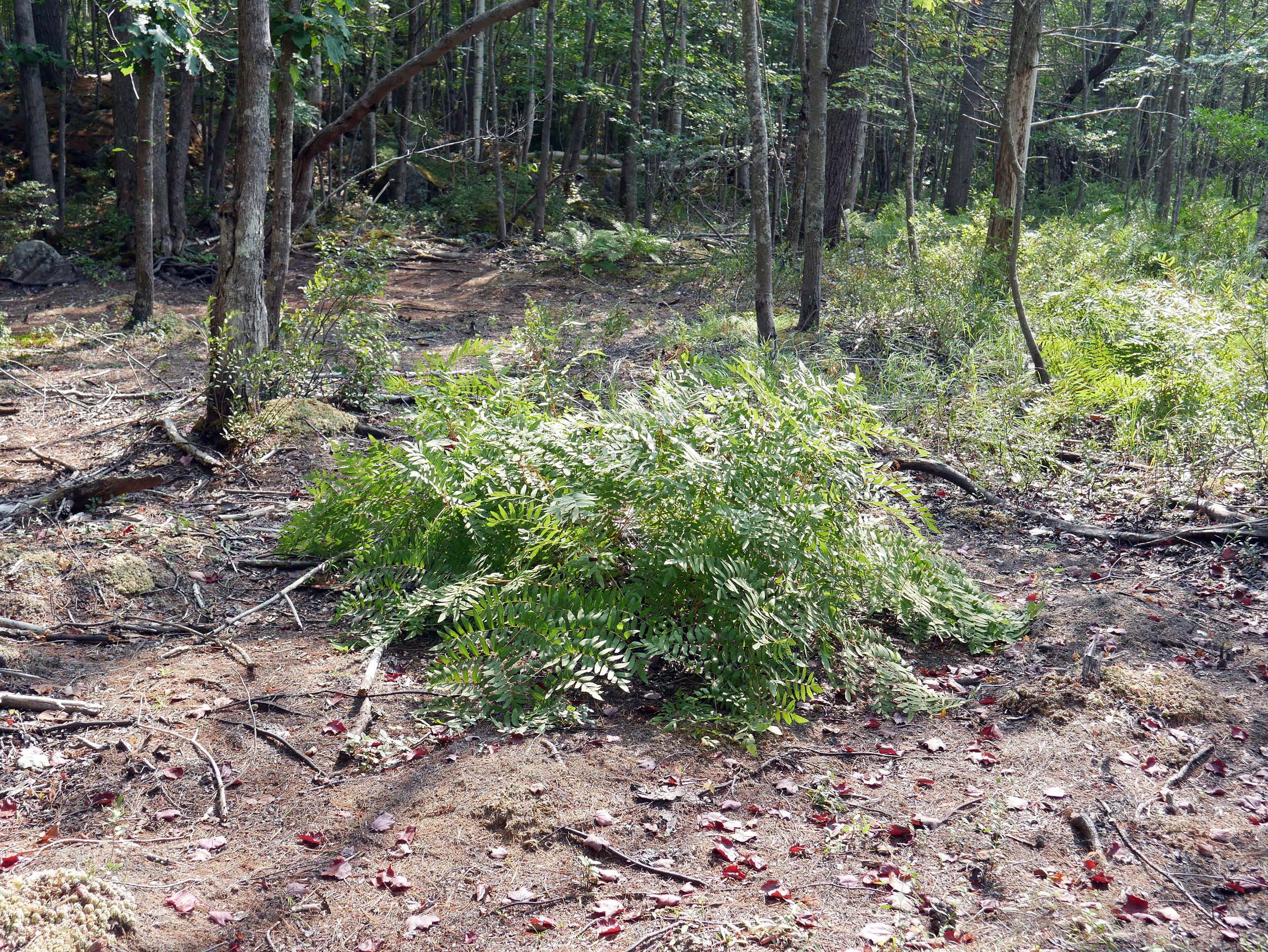 Fig, 9. Royal Fern in sun-exposed area of fen at Loc D looks unstressed, there is no standing water. |
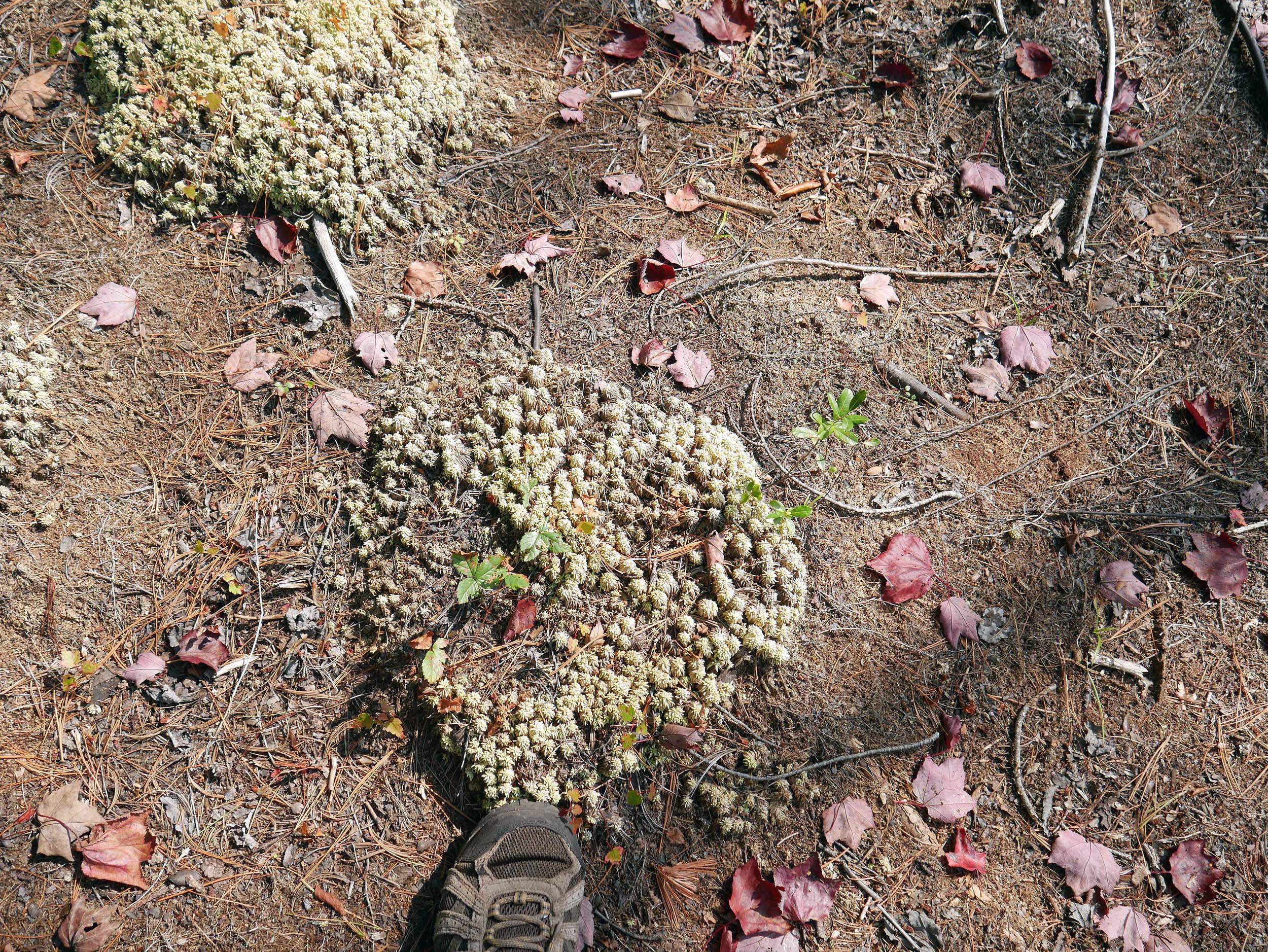 Fig. 10 Sphagnum Moss in a sun-exposed area of fen at Loc D dried up, appears dead |
On Sep 22, 2025 I followed an informal trail leading to “Piggy Mountain that I had walked many times before and noted a lot of early dieback or early early leaf fall or early fall sensecnec (fall colours) in patches of Broom Crowberry, Lowbush Blueberry and Teaberry on thin soils on rocky outcrops, and of Black Huckleberry at the edges of the outcrops.
Insert pics examples
I wondered whether there would lasting impacts… To assess, really need observationns at specific sites before 2025, 2025 and in 2026…
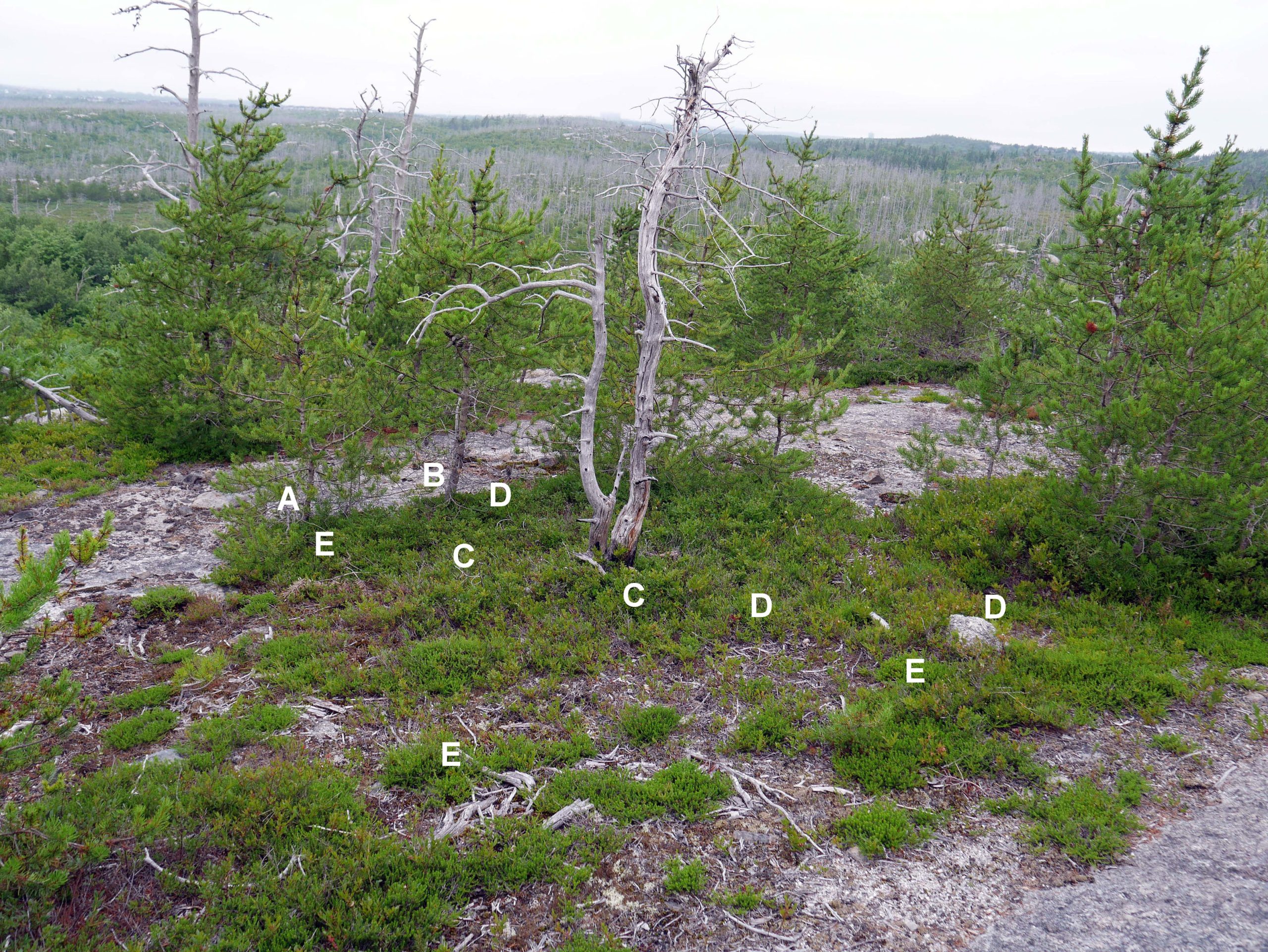
Figs X-X: Photos on an outcrop on west side of Piggy Mountain in 2024, 2025, 2026. See 2025 photo for letter legends.
2024, July 10
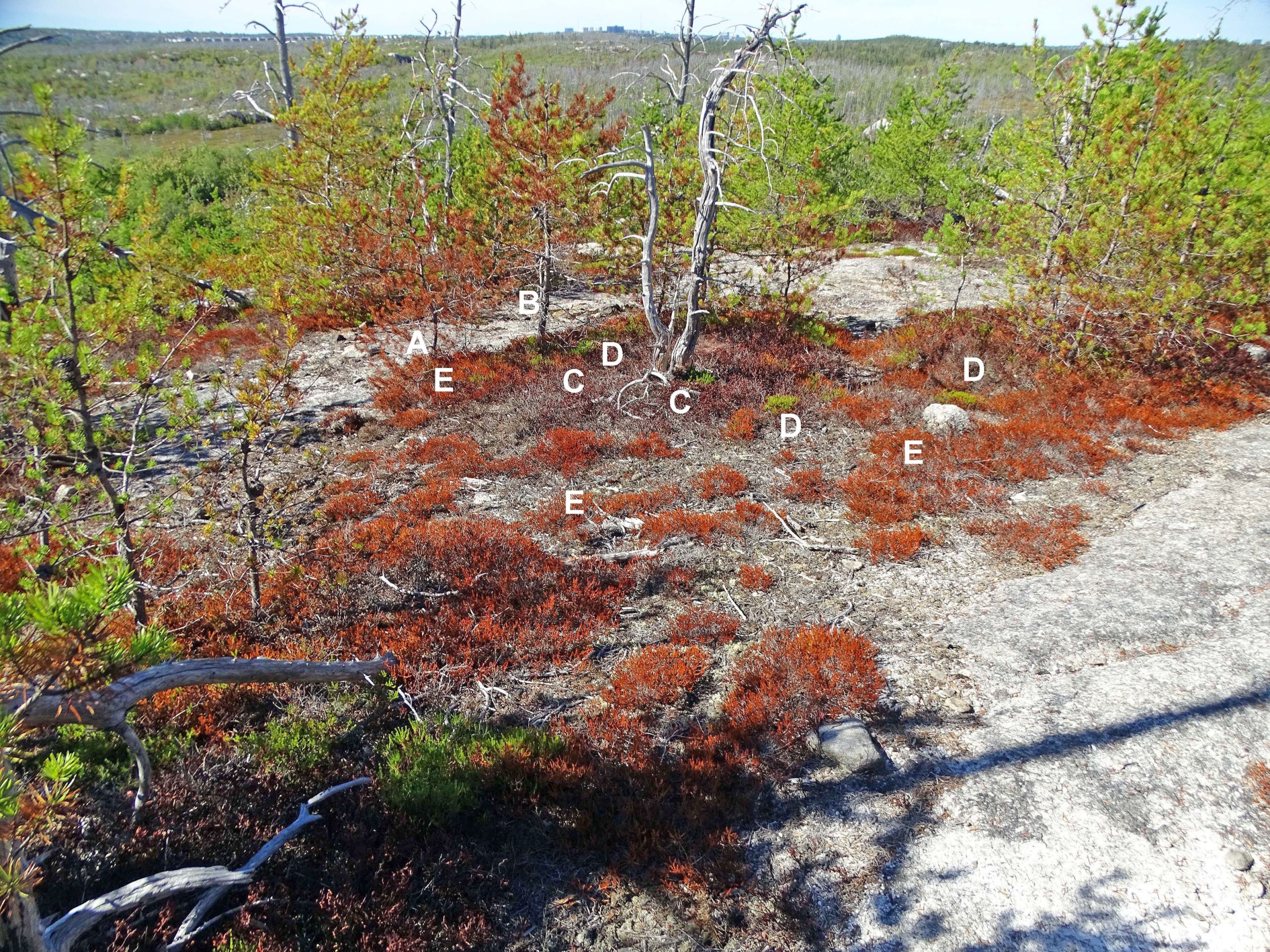
2025, September 22
A: Jack Pine – this tree was healthy in 2024 (pic above this one); it appeared to be completely heat-killed in 2025 (this pic); no recovery in 2026 (pic below).
B: Jack Pine – this tree appeared to be mostly heat-killed in 2025, a few twigs remained green; it was healthy in 2024; a few twigs remained green in 2026 (as in 2025). C: Lowbush Blueberry appeared to be completely heat-killed in 2025, healthy in 2024; no recovery in 2026 (2 examples among more at this site).
D: Broom Crowberry, small clonal clump, green & living in 2024, 2025 and 2026 (3 examples among more at this site).
E: Broom Crowberry, orange-brown clumps in 2025 – early senescence of heat killed?; clearly alive (green) in 2024; clearly dead in 2026 (3 examples among more at this site).
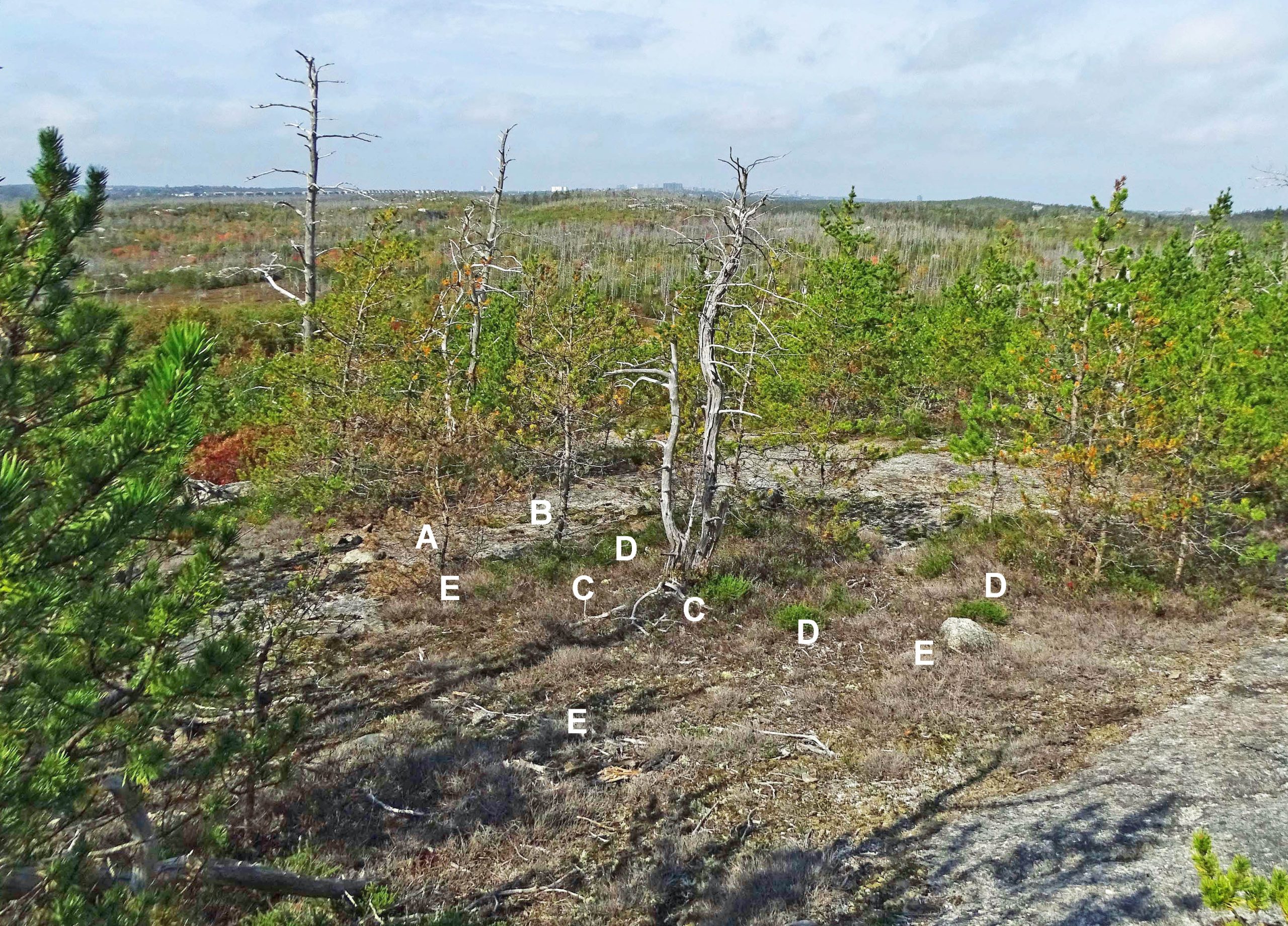
2026, October 2
In 2025, also noted alot of browning and/or early fall senescence of Black Huckleberry deciduous bush) at the edges of the outcrops. …also teaberry.
*The “Jack Pine/Broom Crowberry Barrens”in our Backlands are “Nationally Unique, Globally Rare” plant community, the distinctive features being the co-occurrence of Jack Pine, a boreal species here at the southern limit of its distribution, and Broom Crowberry… They are a type of “pine barrens” which in general are well adapted to droughty, nutrient-poor soils and to repeated fires.