By David Patriquin
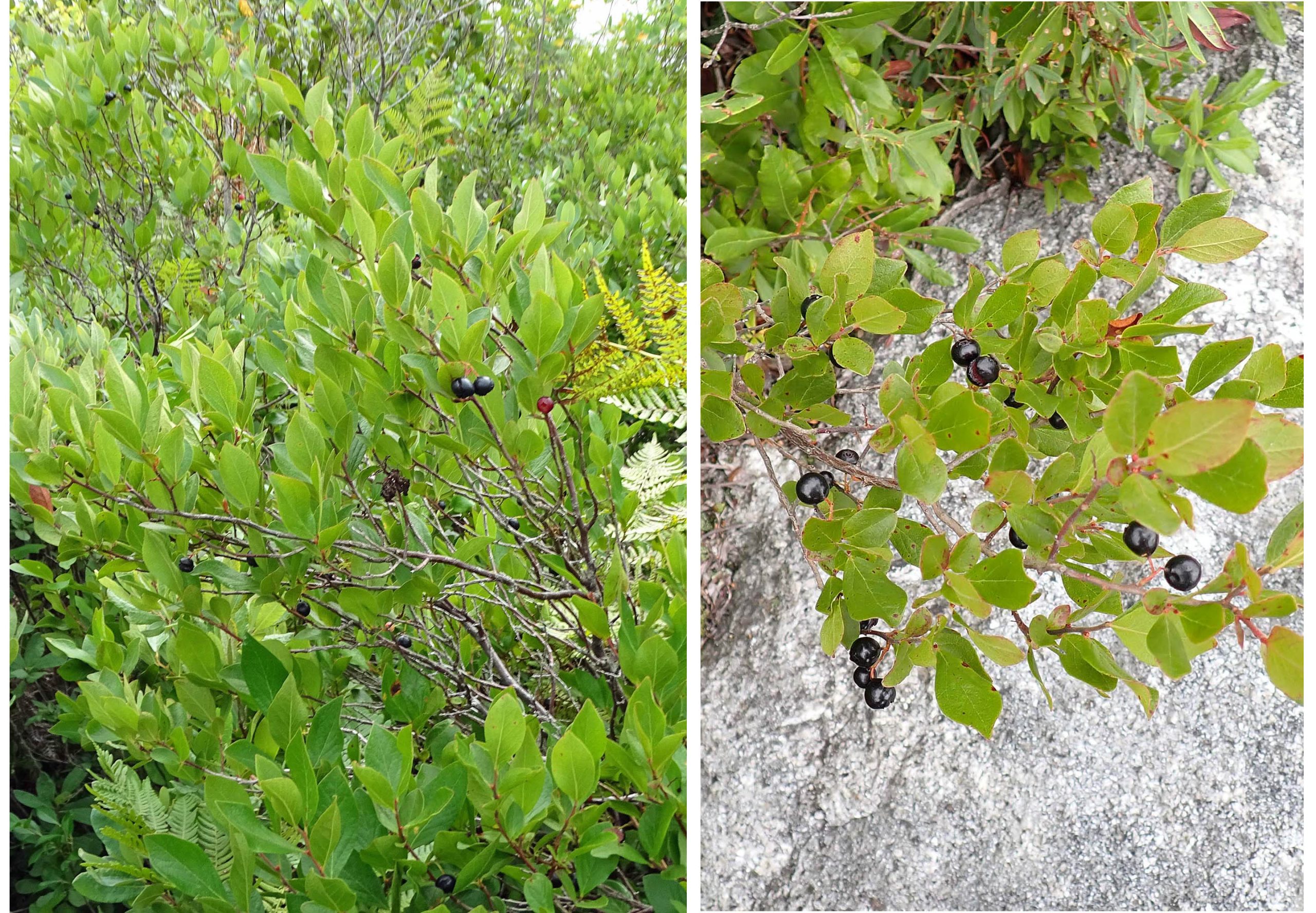
Ripe Huckleberries on barrens by East Pine Island Pond Sep 7, 2026
Click on images for larger versions
Huckleberry (Gaylusaccua baccata)* on the barrens by East Pine Island Pond yesterday were ready for pickin’.
*There are two Gaylussacia species in NS, G. dumosa, common name “Bog Huckleberry” and G. baccata, common name “Huckleberry” or “Black Huckleberry”.
Huckleberries are as sweet as a berry can be, I told my walking mate. He agreed but a few minutes later spat a mouthful out and cursed their sourness.
“Those were not Huckleberries” I said. “There’s no such thing as a sour huckleberry”.
Sure enough I checked the spot out and there was a single shoot of Black Chokeberry (Aronia melanocarpa) amongst the Huckleberry bushes. There were no berries on it – he had picked them, but the leaves are distinctive, at least they are when you look at them close-up. Black Chokeberries have finely toothed margins versus the smooth margins of Huckleberry leaves; other diffs: the leaf tips of Black Chokeberry are more rounded or blunt compared to those of Huckleberry; the venation is more obviously a network in leaves of Huckleberry than in leaves of Black Chokeberry; the stalks of the Black Chokeberries are generally longer than than those of Huckleberries.
And then there is the taste test. Black Chokeberries are sour to taste and are reported to be “astringent”. Huckleberries are as sweet as a berry can get!
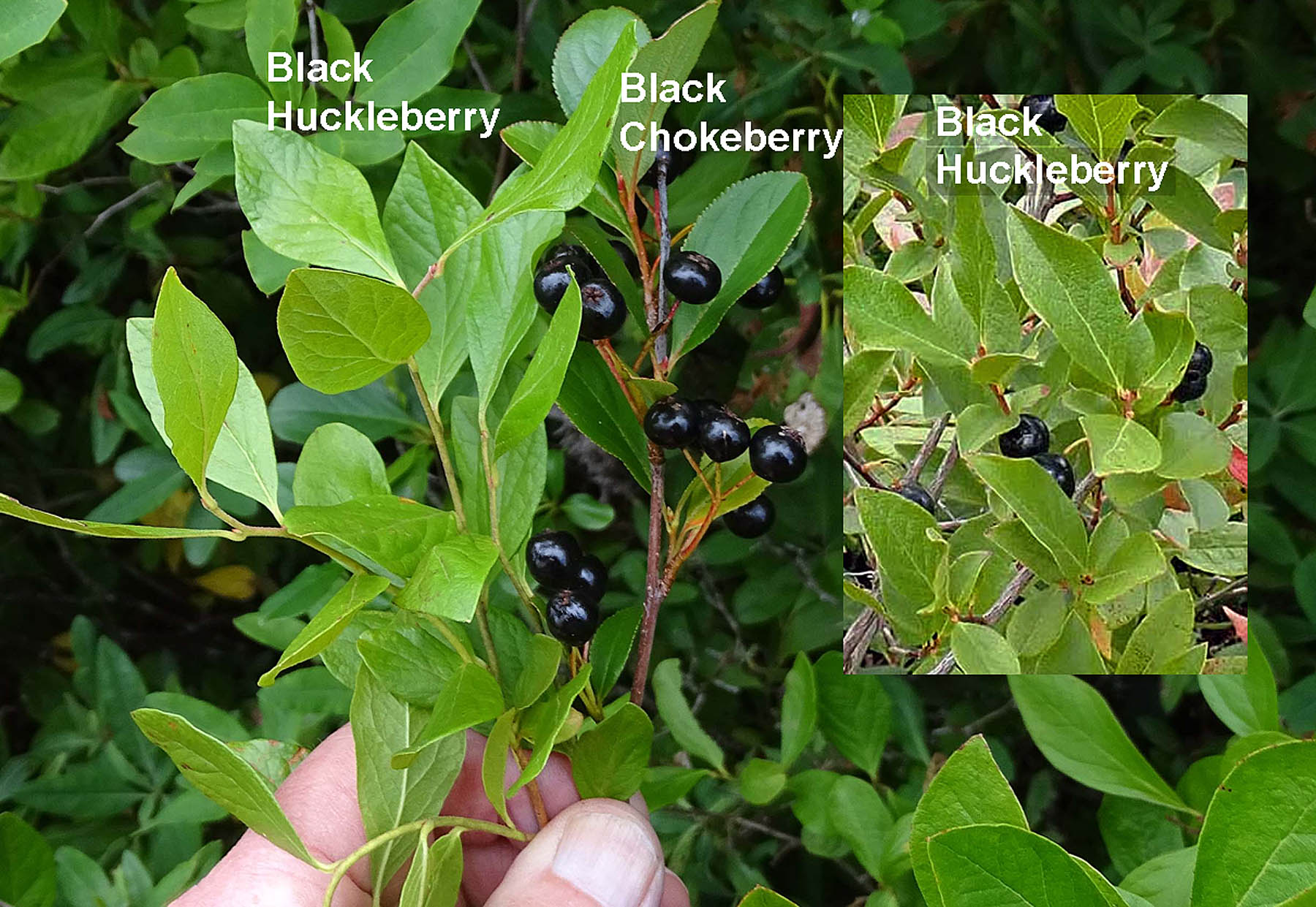
Huckleberry (left and right) and Black Chokeberry (centre) Sep 7, 2026 Click on image for a larger version and to view differences in leaf margins between the two species. More Compare Pics
Individual Black Chokeberries are not easily distinguishable from Huckleberries. (So don’t take berries home to discover there is a difference in taste!) However I would say there is about a 90% chance that if you see a big cluster of berries in a Huckleberry stand, they will be those of Black Chokeberry; Huckleberry rarely produces dense clusters of berries.
Also common on these barrens (or more specifically in the bushlands on the barrens) and mixed with Huckleberries were wild raisin (aka Witherod, Viburnum nudum).
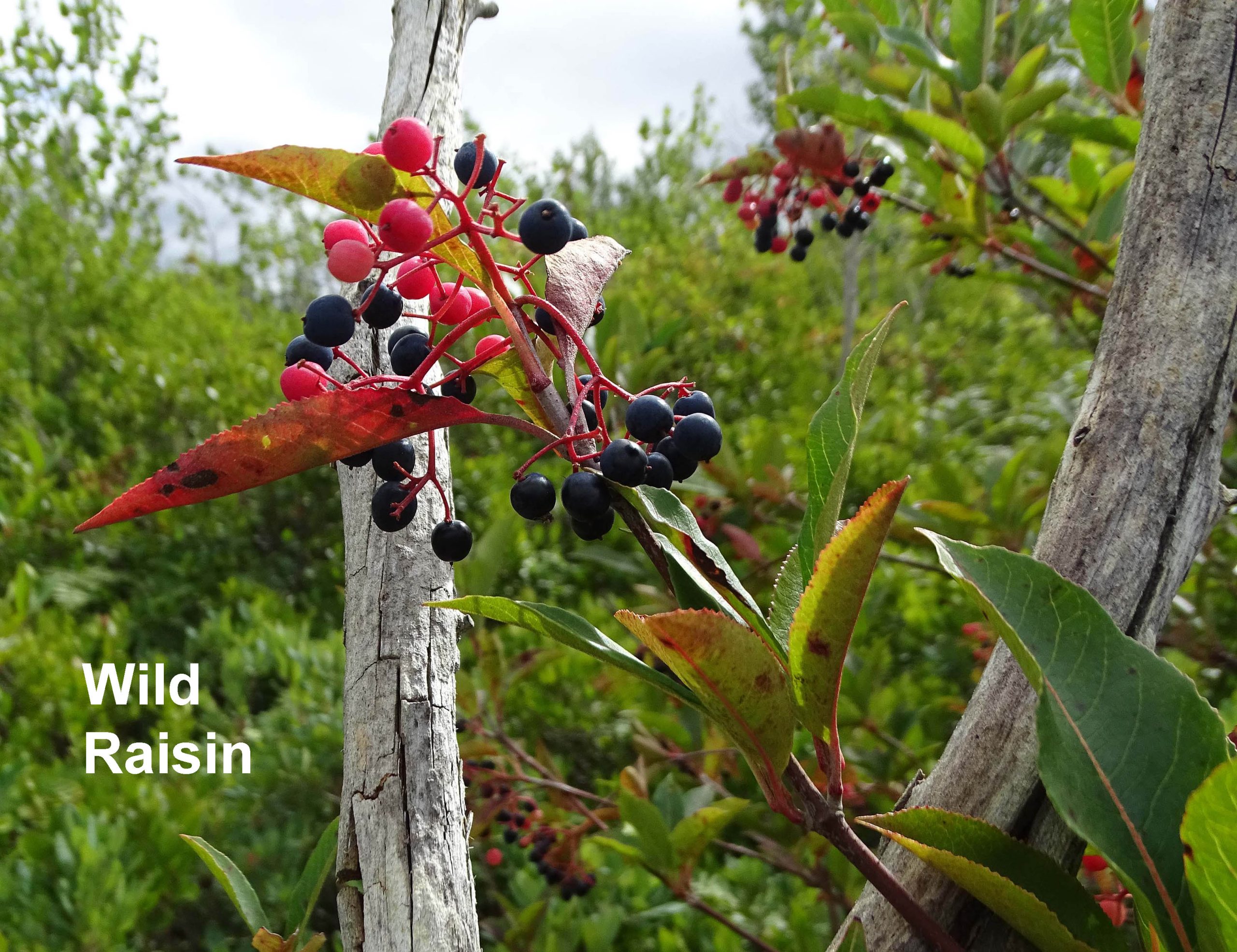
Wild Raisin Sep 7, 2026. The purple berries are ripe and edible,
The leaves and berries of Wild Raisin are readily distinguishable from those of Huckleberries. Wild Raisin berries turn from pale white to pink to red to purple as they ripen. When purple Wild Raisin berries dry out a bit, they look like raisins and have the same chewy texture. Wild Raisin berries are edible but are tasty for only about a week after they first turn purple.
The purple berries I sampled yesterday were not shrivelled up at all and were not as as sweet as I am used to; I am guessing they need some sun to sweeten them up and dry weather to concentrate the sugars.
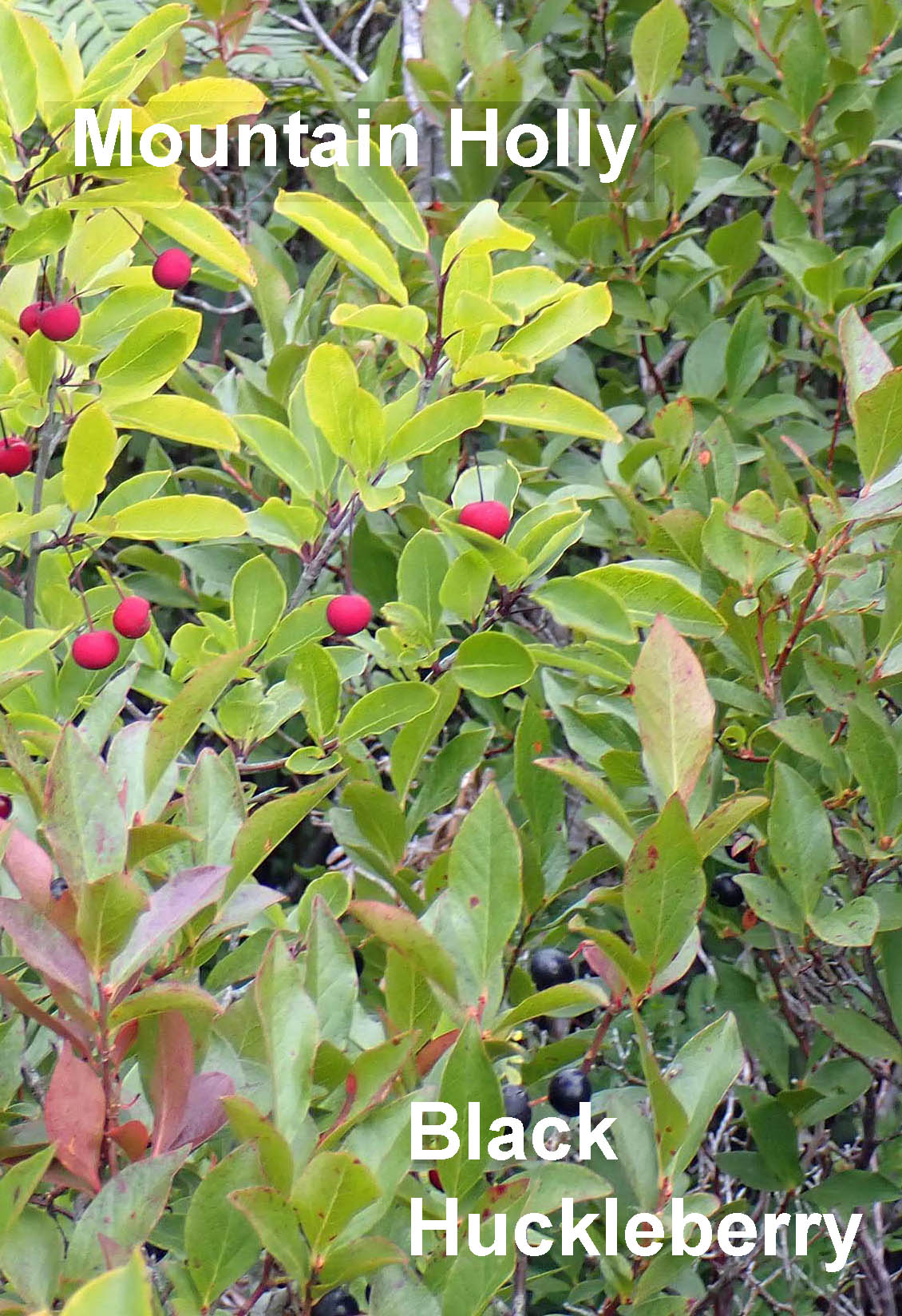
Mountain Holly and Black Huckleberry Sep 7, 2026
Also occurring on these barrens, sometimes mixed with Huckleberry, was Mountain Holly (Ilex mucronata). It has bright pink to red berries, easily distinguished from those of huckleberry. Mountain Holly berries are not good eating and may be toxic to humans.
“Everybody” , it seems, picks Blueberries (Vccinium spp) which peak in early August on the barrens but few pick Huckleberries. Perhaps that’s because Huckleberries are not as distinctive as Blueberries. And it takes more work to get a handful.
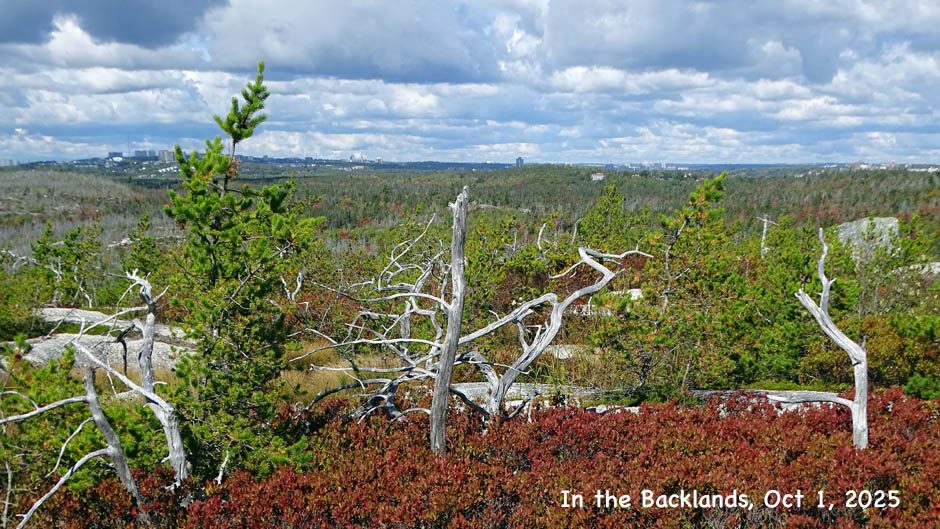
There are more than enough Huckleberries on the barrens for everybody to sample them, at least in a moderately moist year like this one. Huckleberries are the most common shrub on our barrens; they are the plants that turn fire engine red in October giving us a final spectacular flash of colour across the barrens landscape before the weather gets really cold.
So if you haven’t yet sampled their sweetness… now is the time!
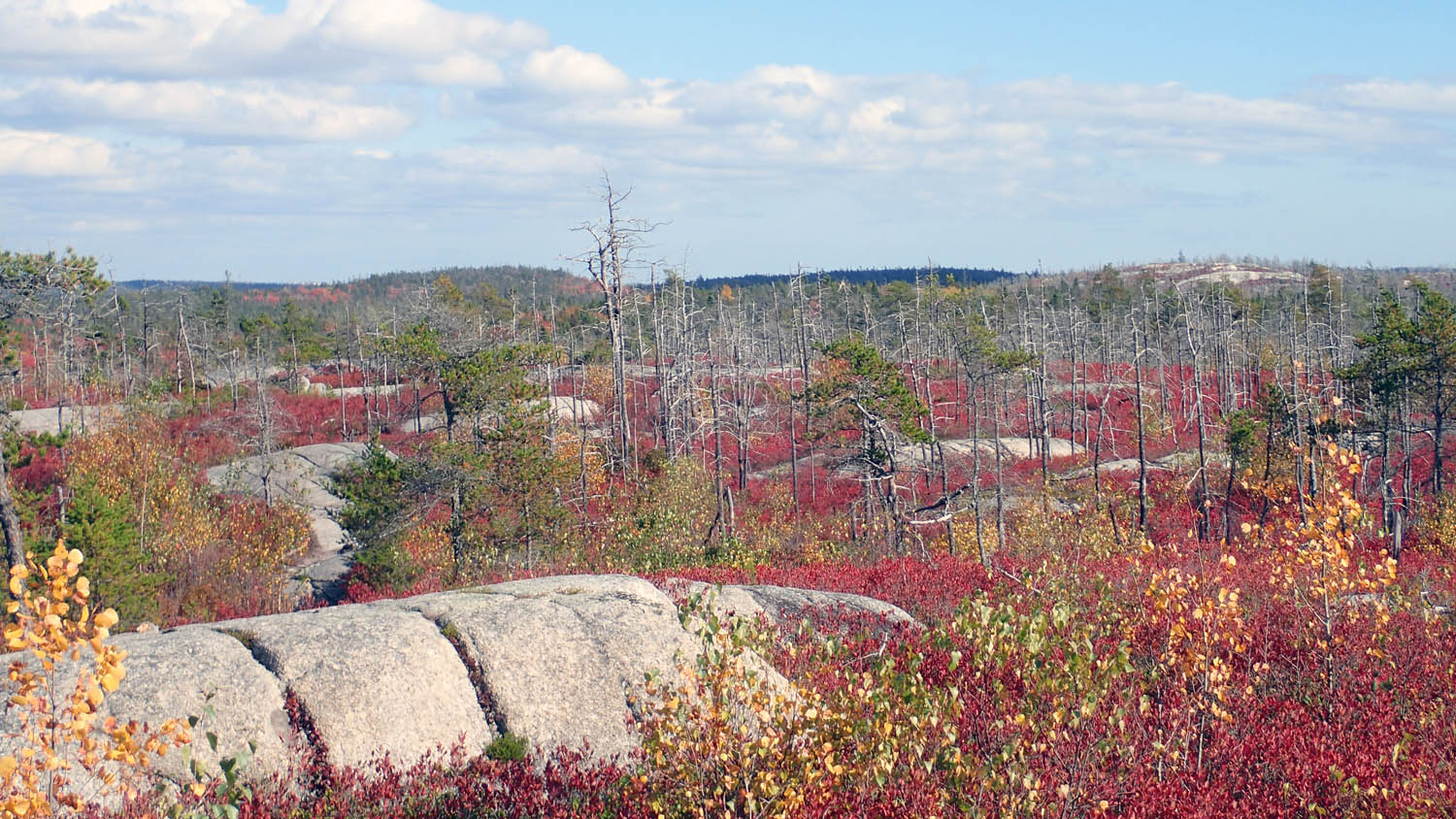
The barrens by the Governor’s Brook residential area on Oct 17, 2016. Huckleberries offer a final spectacular flash of colour across the barrens landscape before the cold weather sets in. Read more: Osprey Trail: pine barrens & whalebacks